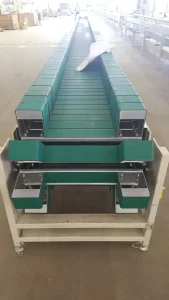
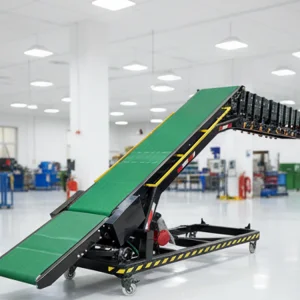
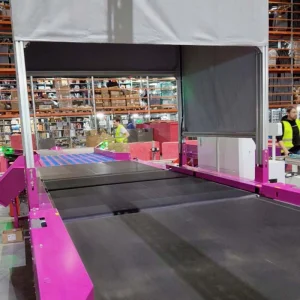
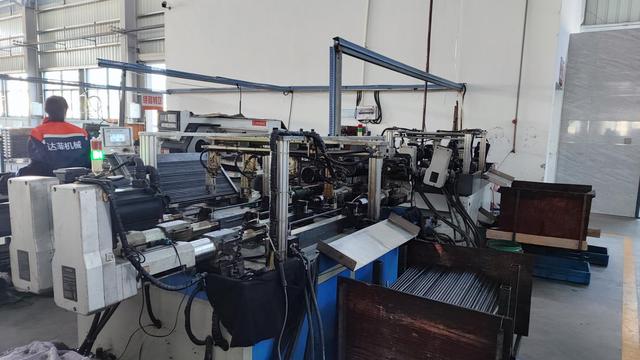
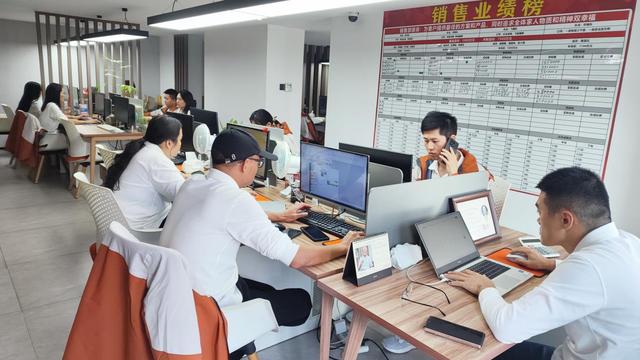
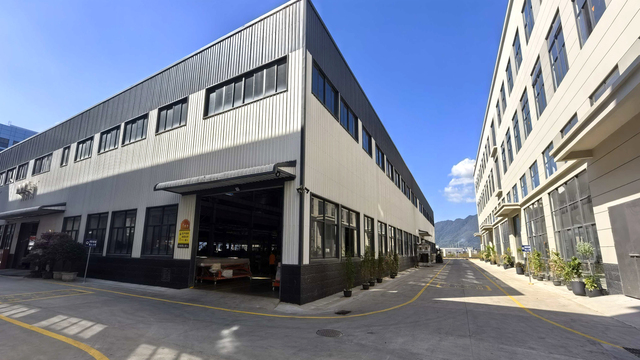
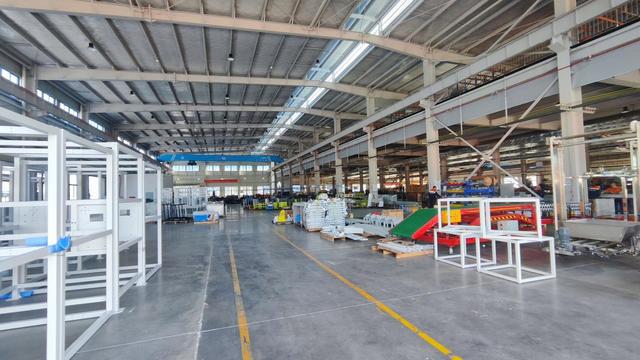
Operating a centralized 30,000 square meter fabrication facility in Hangzhou, China, our hardware and software architectures are developed in-house. We integrate mechanical drafting, laser profiling, CNC assembly, and electrical control testing within one comprehensive supply chain model.
Our workforce of 360+ experienced personnel includes 40+ dedicated mechanical designers, PLC control developers, and software integration specialists. This collective engineering depth allows us to customize complex logic loops, multi-tiered sorting arrays, and variable speed protocols.
With an annual output exceeding 6,500 turnkey conveyor units, our products conform strictly to European CE directives and international ISO standards. We manage comprehensive international logistics, customs documentation, and on-site or remote installation oversight globally.
Modern global industry is transitioning from fixed-speed, purely mechanical transport lines toward intelligent, dynamic, and energy-responsive material handling systems. The variable speed conveyor (VSC) represents the cornerstone of this evolution. Traditionally, conveyors operated at a single rate, leading to excessive wear during empty runs and bottlenecking during supply surges. Today, the integration of advanced Variable Frequency Drives (VFDs), digital sensor networks, and decentralized motor controls permits on-the-fly velocity modulation.
Industry 4.0 dictates that logistics infrastructure must behave as an interactive, real-time node. With VSC technology, throughput can be precisely matched to processing machinery speeds or sorting line capacity. This synchronization is particularly crucial for DWS (Dimensioning, Weighing, Scanning) operations, packaging terminals, and assembly phases where stop-and-go actions must be eliminated in favor of continuous, smooth flow. Furthermore, dynamic speed regulation yields significant energy savings, reducing factory power draws by up to 30% by running lines at lower speeds during low-throughput cycles.
As global corporations aim for net-zero manufacturing carbon footprints, variable speed technology supports energy-efficiency metrics. Dynamic power adjustments reduce idling load and optimize thermodynamic output of gearboxes.
Integrating laser, photo-eye, and load-cell networks allows the conveyor line to calculate material densities. Machine learning algorithms adapt acceleration curves without human intervention.
Modern VSCs monitor motor drive torque deviations, thermographic changes, and mechanical vibrational frequencies to alert maintenance units prior to structural failure events.
For procurement managers in high-regulatory environments, such as the European Union (EU) and North America, sourcing raw material machinery requires adherence to rigorous safety directives. Foremost among these is the CE Certification (Conformité Européenne). A CE-marked variable speed conveyor validates that the hardware has been vetted for electrical safety, structural integrity, and electromagnetic compatibility. This is crucial for systems featuring variable speed drives, which can introduce electrical harmonic noise into industrial power grids if not engineered with proper filters.
Key regulatory standards required for international conveyor validation include:
| Regulatory Directive / Standard | Operational Target Area | Maith Conveyor Adherence Specifications |
|---|---|---|
| 2006/42/EC (Machinery Directive) | General Mechanical Safety & Emergency Systems | Dual-channel E-stop circuits, integrated mechanical shielding, safety hazard placards. |
| 2014/35/EU (Low Voltage Directive) | Electrical Control Enclosure Safety | IP55/IP65 grade enclosures, shielded control wiring, structured grounding grids. |
| 2014/30/EU (EMC Directive) | Electromagnetic Noise Suppression | Integrated VFD filters, high-density braided cables, isolated signal pathways. |
| EN ISO 12100:2010 | Mechanical Risk Assessment Protocols | Computer-simulated stress analyses, load fatigue testing, shear point elimination. |
Enterprise buyers look beyond unit costs; they evaluate Total Cost of Ownership (TCO). Factors such as installation simplicity, modular structural parts, and reliable component sourcing (e.g., standardizing on SEW-Eurodrive, Siemens, or Nord drive assemblies) govern these decisions. Maith Conveyor integrates global component options directly into the design process to ensure parts availability across local markets.
China's manufacturing sector has transitioned from assembly-focused work to advanced, high-tech engineering. Hangzhou Maith Conveyor Co., Ltd. sits at the heart of this industrial transformation. Leveraging the advanced regional supply chains of Zhejiang province, Maith utilizes domestic sourcing networks for high-grade steel, precision bearings, advanced electronics, and automated tooling systems. This centralized sourcing network significantly reduces production lead times and insulates international buyers from supply chain disruptions.
The core advantages of Maith’s Hangzhou-based operations include:
From raw sheet-metal laser cutting to final electrical panel wiring, every step occurs within our 30,000 square meter plant. This direct control eliminates double-handling margins and ensures strict quality control at every phase.
Hangzhou’s status as a leading technology hub provides Maith with direct access to top automation talent. Our engineers design systems featuring high-speed digital networking and AI-driven sorting algorithms.
Our close proximity to Ningbo-Zhoushan and Shanghai ports ensures reliable, cost-effective container logistics and ocean freight schedules to Europe, the Americas, and Southeast Asia.
Material handling requirements vary significantly across different industrial applications. Off-the-shelf, fixed-speed solutions often fail to meet the performance needs of modern manufacturing. Below are some of the key application scenarios where Maith’s variable speed systems excel:
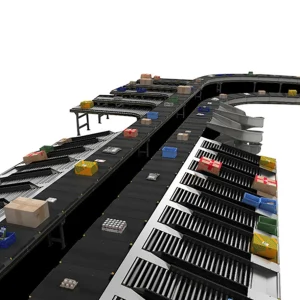
In high-volume e-commerce fulfillment centers, sorting throughput requirements change rapidly throughout the day. By using variable speed belt and roller conveyors linked to photo-sensor arrays, systems dynamically adjust to handle incoming sorting peaks and slow down during lower-volume periods to prevent line damage.
Automotive manufacturing requires precise synchronization across various production phases. Heavy-duty chain and roller conveyors must carry heavy chassis loads, accelerating smoothly between robot welding stations and decelerating to precise positions for manual trim installations.
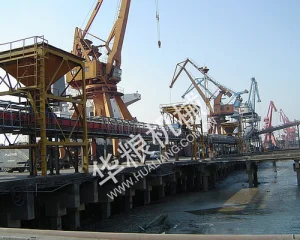
Bulk marine and terminal handling requires heavy-duty structures to handle changing cargo densities and environmental factors. Our port loading belt conveyors dynamically adjust motor torque output based on load weight, ensuring consistent belt tension and preventing slippage or motor burnout.
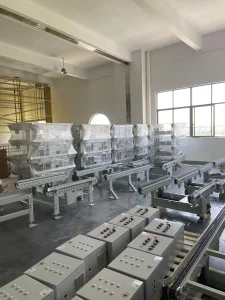
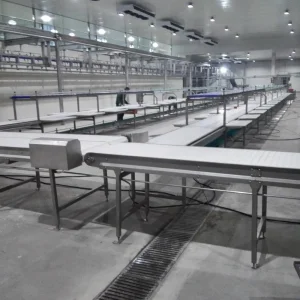
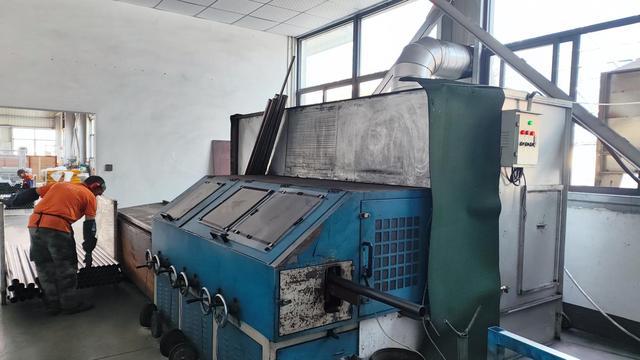
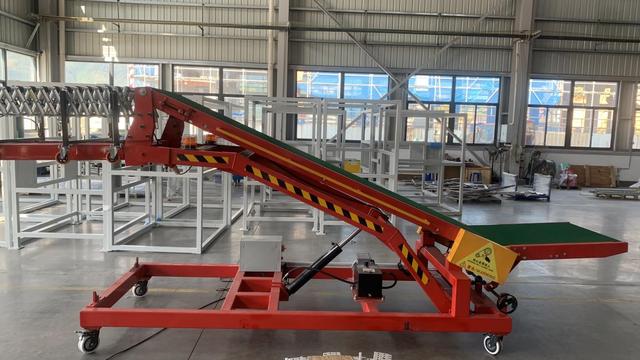
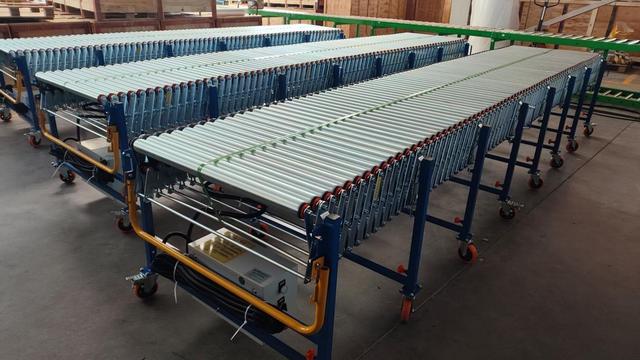
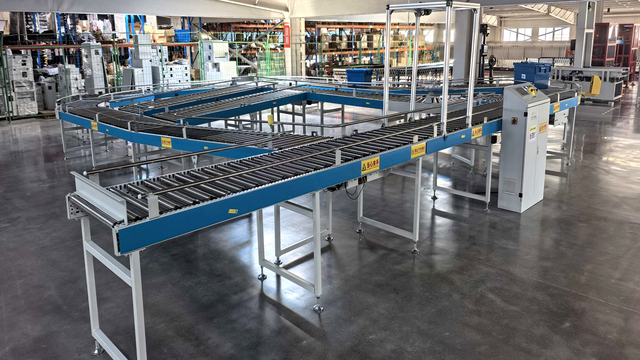
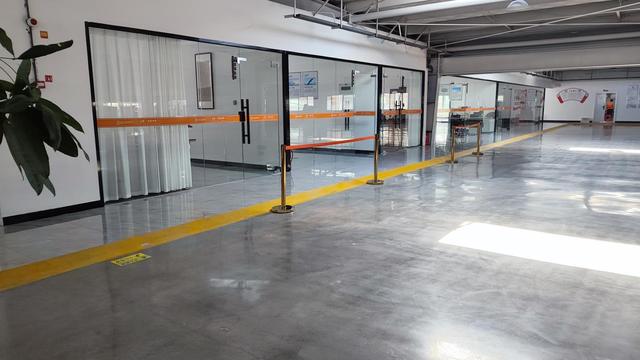
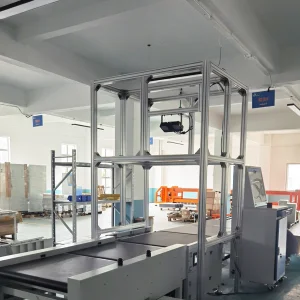
A view inside our 30,000 square meter facility in Hangzhou, showing our production stages, precision welding, and testing areas.
 Maith Conveyor